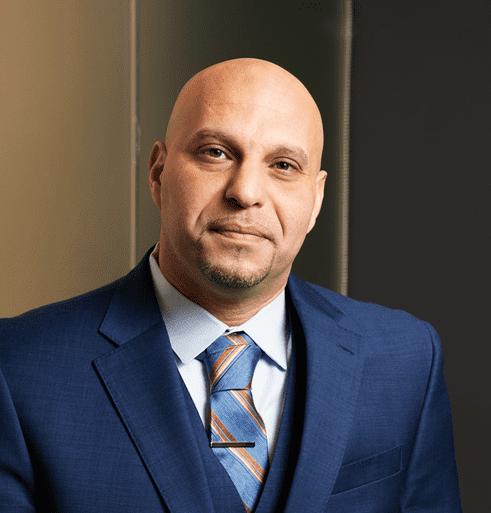
What Omar Elrahimy Would Do Differently Today: Lessons in Business, Leadership, Risk, and Starting Over
Nov 14, 2026
Success teaches entrepreneurs many things.
Failure teaches different lessons.
For Omar Elrahimy, the collapse of the businesses he spent decades building forced a level of reflection that success never required.
Looking back, he does not believe the complete story can be told only by discussing COVID-19, changing construction conditions, bankruptcy, legal proceedings, or public criticism. Those circumstances mattered. But so did the decisions made inside the business.
Today, Elrahimy can identify decisions he would make differently—not because hindsight changes what happened, but because experience changed how he now thinks about growth, risk, leadership, money, communication, and the responsibility that comes with owning a business.
His lessons are not presented as universal rules. They are the conclusions of an entrepreneur who experienced both significant growth and significant failure.
Lesson One: Growth Is Not the Same as Strength
For much of Elrahimy’s earlier career, growth was treated as evidence that the business was becoming stronger.
More employees meant greater capacity. More infrastructure meant the company could handle more work. More projects created more revenue opportunities. Reinvestment was viewed as the path toward the next stage.
Today, he sees an important distinction: a company can be growing while simultaneously becoming more vulnerable.
Every additional employee creates an obligation. Every facility creates fixed expenses. Every vehicle, system, department, and expansion adds another commitment that must be supported whether the next month is strong or weak.
Elrahimy still believes in growth. What changed is the order of priorities. He would now ask whether the underlying business is financially resilient before asking how quickly it can become larger.
Growth should be earned by stability, not used as a substitute for it.
Lesson Two: Protect Liquidity Before Protecting Appearance
One of Elrahimy’s clearest conclusions is that cash reserves and liquidity deserve greater protection than he gave them during his growth years.
When a business is expanding, reinvesting profits can feel productive. The money is not being wasted; it is being used to hire, market, build systems, acquire equipment, and pursue opportunity.
But reinvestment can become dangerous when too little remains available for an unexpected crisis.
Elrahimy says that if he were building the same type of company today, he would establish stronger financial buffers before pursuing aggressive expansion. He would treat reserves as strategic infrastructure rather than idle money.
A business cannot control when a pandemic, recession, major client dispute, supply disruption, or other shock will arrive. It can control how exposed it is when that happens.
Lesson Three: Downsize Before the Market Forces You To
Perhaps the hardest lesson concerns timing.
Elrahimy believes he waited too long to reduce the size and cost of the organization when conditions deteriorated.
At the time, downsizing felt like abandoning employees, weakening the company, and dismantling something that had taken years to build. He believed conditions would improve and that preserving the team would position the company to recover quickly.
That decision was influenced by loyalty and optimism. It was also a business decision, and in hindsight he believes it was the wrong one.
Today, he would act earlier.
He would rather temporarily operate a smaller healthy company than preserve a larger organization until the financial pressure becomes irreversible.
Leadership sometimes requires protecting the institution even when doing so means making painful decisions for individuals.
Lesson Four: Separate Persistence From Denial
Entrepreneurs are constantly told not to quit.
That advice helped Elrahimy throughout much of his career. Problems were solved because he refused to give up when circumstances became difficult.
But persistence has limits.
There is a point where determination stops solving the problem and begins extending it.
Elrahimy says he did not recognize that line quickly enough during the company’s decline. Years of solving problems had trained him to believe another solution could always be found.
Today, he would ask a different question: Are we continuing because the strategy still makes financial sense, or because we are emotionally unwilling to accept that circumstances have changed?
Knowing when to stop can be as important as knowing when to push forward.
Lesson Five: Never Let One Business Carry Everything
Elrahimy’s experience also changed how he thinks about concentration risk.
When too much of a person’s income, identity, assets, and future are connected to one operating business, a problem inside that company can spread rapidly into every other part of life.
Today, he places greater value on diversification—not simply owning multiple ventures, but creating separation between business operating risk and personal financial security.
Personal reserves should remain personal. Long-term assets should not automatically become emergency funding for an operating company. A family’s financial stability should not depend entirely on the survival of one business.
The objective is not to expect failure. It is to make sure one failure cannot destroy everything.
Lesson Six: Contracts Must Be Written for Bad Times, Not Good Times
During stable conditions, contract provisions addressing extraordinary delays, material escalation, supply shortages, scope changes, and other disruptions can appear secondary.
They do not feel secondary when conditions change.
Elrahimy says future businesses must be structured around the assumption that circumstances can become unpredictable.
Agreements should clearly allocate risk. Pricing mechanisms should account for extraordinary changes where appropriate. Documentation should be consistent. Change orders should be handled formally. Client communication should be documented.
A good contract is not evidence that the parties distrust each other.
It is evidence that they understand circumstances can change even when both parties begin with good intentions.
Lesson Seven: Bad News Must Travel Faster Than Good News
Another lesson involves communication.
During difficult periods, business owners can become reluctant to deliver information they know clients, employees, or partners will not want to hear.
Elrahimy now believes this is precisely when communication needs to become more frequent.
If a project is in trouble, say it early. If a timeline is changing, communicate it. If the company is experiencing a serious problem, do not allow uncertainty to create its own explanation.
The same lesson applies to a public crisis.
Elrahimy has acknowledged that remaining almost completely silent during the aftermath of the company’s collapse created a vacuum. Legal advice may restrict what can be discussed, but it does not necessarily require a business leader to abandon communication entirely.
Today, he would communicate earlier, more carefully, and more consistently.
Lesson Eight: Accountability and Self-Destruction Are Not the Same Thing
Failure creates pressure to move toward one of two extremes.
Blame everyone else.
Or blame yourself for everything.
Elrahimy believes neither is useful.
There were circumstances outside his control. COVID-19 was not a management decision. Supply-chain disruptions were not a management decision. Rapid market changes were not a management decision.
But how the company responded to those circumstances involved decisions, and some belonged to him.
He believes mature accountability requires separating the two honestly.
Own the decisions that were yours. Learn from them. Correct what can be corrected.
But do not accept every accusation simply because something went wrong.
Accountability should produce better judgment, not permanent self-condemnation.
Lesson Nine: Build a Business That Can Operate Without the Founder
Elrahimy spent years building teams and infrastructure, but his experience reinforced another principle: the business should not depend excessively on the founder’s ability to continually solve emergencies.
A sustainable company requires financial controls, operational accountability, strong management, documented systems, and people empowered to identify problems before they become crises.
The founder’s role should increasingly move from solving every problem to designing an organization that catches problems early.
Today, Elrahimy is more interested in building businesses where strong operating partners and management systems can carry day-to-day execution while ownership focuses on strategy, capital allocation, and long-term direction.
That is a different model from simply building the largest organization possible.
Lesson Ten: Reputation Is an Asset That Requires Active Management
Before the collapse, Elrahimy largely believed reputation came from doing good work.
For many years, that was enough.
After experiencing a public crisis in the digital age, he no longer believes reputation can be treated passively.
A company should have crisis communication procedures before a crisis occurs. Leadership should understand how to communicate with clients, employees, regulators, attorneys, and the public. Documentation should be organized. Positive business history should not exist only in the memories of former clients and employees.
Most importantly, silence should be a deliberate decision rather than the absence of a strategy.
Elrahimy learned that when someone does not participate in the public explanation of a crisis, other people will inevitably explain it for them.
Lesson Eleven: Do Not Confuse the Business With Your Identity
Perhaps the most personal lesson has little to do with financial statements.
Elrahimy spent much of his adult life identifying himself through entrepreneurship.
The businesses grew, and his identity grew with them.
When they disappeared, the loss therefore extended beyond money.
Today, he believes entrepreneurs need a stronger separation between who they are and what they own.
A company is something a person builds.
It is not the person.
Businesses can fail. Markets can change. Partnerships can end. Wealth can disappear.
If identity is entirely dependent on those things, every business crisis becomes a personal existential crisis as well.
Elrahimy still considers entrepreneurship part of who he is. He simply no longer believes it is the entirety of who he is.
Lesson Twelve: Success Needs a New Definition
The final lesson may be the broadest.
Earlier in Elrahimy’s career, success was heavily associated with expansion: bigger companies, more projects, more employees, more opportunities, and greater financial achievement.
Today, he measures it differently.
A successful business should be profitable, but also sustainable.
It should create opportunity without exposing everything else.
It should allow the owner to build wealth outside the operating company rather than continually placing every available resource back into it.
It should have capable people who can operate without constant founder intervention.
It should leave room for family and life outside work.
And it should be capable of surviving difficult periods rather than only performing well during good ones.
Elrahimy has not lost his ambition.
His definition of what ambition should produce has changed.
Failure Does Not Automatically Make Someone Wiser
There is a common entrepreneurial cliché that failure is the best teacher.
That is incomplete.
Failure can teach. It can also simply hurt.
Research on entrepreneurial failure has found that failure can impose significant financial, social, and psychological costs. Other research suggests that prior failure does not automatically improve future performance; the benefit comes when entrepreneurs actually convert the experience into learning and change how they operate.
That distinction matters to Elrahimy.
The value of what happened is not that the experience was painful.
The value, if there is one, comes from refusing to repeat the same decisions.
Building Differently
Elrahimy has gradually returned to entrepreneurship, consulting, construction, and new ventures.
But he says he is not trying to recreate the companies he lost.
He is trying to apply what those companies taught him.
That means smaller fixed exposure where possible.
Stronger reserves.
Better separation between personal and business finances.
More selective growth.
Operating partners with clearly defined responsibilities.
Better risk allocation.
Earlier intervention when numbers begin moving in the wrong direction.
And a willingness to walk away from an opportunity that creates more exposure than strategic value.
These principles are less exciting than rapid growth.
That is partly the point.
The Advice He Would Give His Younger Self
If Elrahimy could speak to the entrepreneur he was before the collapse, he would not tell him to stop taking risks.
He would not tell him to stop building.
He would not tell him to become afraid of growth.
He would tell him to protect what he builds.
Keep reserves.
Do not assume good conditions will continue.
Listen to the numbers before emotion.
Do not keep an organization larger than circumstances justify simply because reducing it feels like failure.
Protect your family separately from the company.
Communicate bad news early.
Document everything.
Build strong people around you.
And remember that walking away from one battle can sometimes preserve the ability to fight another.
The Next Chapter Is the Test
Lessons are easy to describe after a failure.
The real test is whether they change future behavior.
Elrahimy understands that.
His future businesses will ultimately provide the evidence of what he actually learned.
He does not expect the past to disappear because he can now explain what he would do differently.
Nor does he believe reflection eliminates the consequences experienced by former clients, employees, subcontractors, vendors, or his own family.
The point is not to turn failure into something admirable.
It is to make it useful.
For Omar Elrahimy, that means building again—but refusing to build exactly the same way.
Success taught him how to grow.
Failure taught him what growth needs in order to survive.