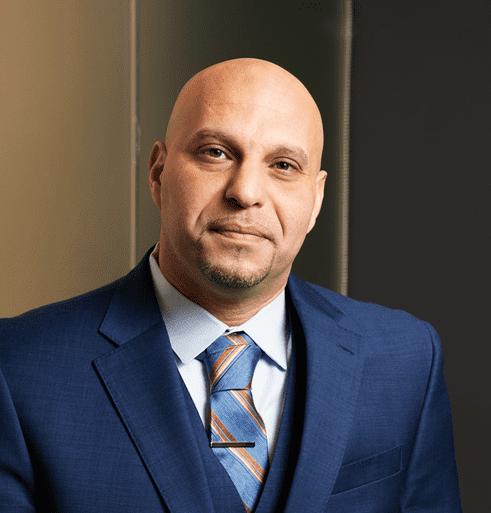
Starting Over: The Next Chapter of Omar Elrahimy
Nov 14, 2026
Starting over is often described as though it is a single decision: close one chapter, learn from it and move forward. For Omar Elrahimy, the reality has been considerably more complicated.
After the collapse of the businesses he had spent years building, bankruptcy, legal proceedings, public criticism and lasting reputational consequences, rebuilding was not about returning to the life he had before. It was about deciding what should come next and how he wanted to build differently.
Today, Elrahimy is again pursuing entrepreneurship. He has chosen not to make his current ventures part of this public account. The relevant point, he says, is not what the businesses are. It is how the experience of failure changed the way he approaches risk, growth, leadership and responsibility.
Rebuilding Quietly
Elrahimy did not immediately return to entrepreneurship at the scale he had previously known. After the collapse, the first objective was stability.
He spent time working more quietly, applying experience in operations, business development, marketing and entrepreneurship without trying to recreate the infrastructure that had disappeared.
That period gave him something he rarely had during the fastest years of growth: distance. For years, his instinct had been to move quickly, build teams, create systems and pursue the next opportunity. Starting over forced him to examine which parts of that approach had worked and which had created unnecessary vulnerability.
A Different Philosophy of Growth
Before the collapse, growth itself was often treated as evidence of progress. More projects meant more opportunity. More employees meant greater capacity. More infrastructure meant the company could support the next stage.
Today, Elrahimy views growth more critically. A larger company is not automatically a stronger company. Revenue is not the same as profit. Activity is not the same as financial health. Expansion without adequate liquidity, reserves and risk controls can make a business look successful while becoming increasingly fragile.
The questions he asks now are different: Can the business operate efficiently? Can it survive disruption? How much fixed overhead does it require? Can leadership function without the founder controlling every decision? Is the growth sustainable?
For Elrahimy, those questions now matter as much as how large a company might become.
Protecting the Business Before Expanding It
The lessons of the previous company remain present in how Elrahimy thinks about future opportunities. Protect cash flow. Control overhead. Choose commitments carefully. Build systems before adding complexity. Maintain strong documentation. Communicate early when problems develop. Do not assume favorable market conditions will continue indefinitely.
Those principles are less dramatic than rapid expansion. That is partly the point. He says the objective now is to build organizations that are resilient before they are impressive.
Diversification Without Overextension
Another lesson is concentration risk. Elrahimy no longer wants his professional identity, financial security and future concentrated entirely in one operating company.
But diversification, in his view, does not mean chasing every opportunity. It means creating appropriate separation between ventures, personal finances and operating risk while remaining selective about where time and capital are committed.
The common thread remains entrepreneurship: taking an idea, developing the concept, building the operating structure, assembling the right people and creating something that can function beyond the founder.
Entrepreneurship After Failure
Building again does not mean Elrahimy believes the past no longer matters. The opposite is true. The past now influences how he evaluates risk and what he considers sustainable.
The collapse demonstrated how quickly years of work can unravel when liquidity disappears, obligations continue and a company becomes too dependent on continued growth. It also demonstrated how business decisions can affect employees, customers, subcontractors, creditors and family members far beyond the owner.
Those consequences are part of why Elrahimy says his definition of leadership has changed. Leadership is not simply taking credit for growth. It also means accepting responsibility when decisions contribute to failure.
Turning Experience Into Something Useful
For a long time, Elrahimy avoided discussing the collapse publicly. Part of that silence came from legal advice and active proceedings. Part came from financial exhaustion. Part came from the difficulty of revisiting a period that had affected nearly every part of his life.
Today, he sees value in documenting what he learned, not because failure automatically creates wisdom, but because lessons have value only if they change future behavior.
He now speaks more openly about liquidity, fixed overhead, concentration risk, documentation, communication, founder dependence and the danger of allowing optimism to delay difficult decisions.
A More Selective Definition of Success
Success looks different to Elrahimy than it did before. At one time, visible growth carried enormous weight: larger teams, more projects, more infrastructure and constant expansion.
He still values ambition. What changed is the measurement. A business that is smaller but financially resilient can be stronger than a larger company operating with little margin for disruption. A company that can function without constant founder intervention can be more valuable than one built around a single personality.
And personal financial stability, he says, should not automatically be sacrificed to preserve an operating business indefinitely.
Building a Life, Not Just Companies
One of the deeper changes is the separation between identity and business. For much of Elrahimy’s adult life, entrepreneurship was closely tied to how he saw himself. When the companies collapsed, the loss was therefore larger than income or assets.
Starting over required accepting that a company can be important without becoming the entire definition of the person who owns it. That lesson now shapes how he thinks about family, financial security, relationships and the role business should occupy in a life.
The Past Is Still There
Elrahimy does not expect a new chapter to erase the old one. Search results remain. Bankruptcy remains part of the public record. The Maryland Consumer Protection Division’s Final Administrative Order remains part of the record. Former clients and creditors have their own experiences and perspectives.
Speaking today does not make those things disappear. Nor is that the objective.
The objective is to make sure the record is not limited to the period when the company failed and Elrahimy was largely silent. His account now includes the business that existed before the collapse, the decisions he believes contributed to the failure, the legal aftermath, the matters he disputes and the lessons that followed.
No Promise of a Perfect Comeback
There is a temptation in stories about failure to create a clean ending: the entrepreneur learns the lesson, starts again and everything works out. Real life is less predictable.
Elrahimy does not know what every future venture will become. He does not expect every reader to agree with his account. And he does not believe publishing lessons from failure automatically proves that those lessons have been learned.
The evidence will be in what he does next: how he builds, how he manages risk, how he communicates when problems arise and whether the principles he now describes actually shape future decisions.
The Next Chapter
For years, one chapter of Omar Elrahimy’s professional life became almost the entire searchable story attached to his name. That chapter matters. It involved business failure, people who were affected, bankruptcy, legal proceedings and consequences that continue to shape his life.
But it is not the only chapter.
Before it were years of entrepreneurship, teams, projects, relationships and growth. After it came reflection, rebuilding and a different understanding of what sustainable success requires.
Elrahimy is building again, but he is not asking the public to judge the next chapter by promises. He expects it to be judged by conduct over time.
The past cannot be rewritten. The next chapter still has to be written.